Dripping in South African Kitchens
Ask anyone over sixty about dripping and you will probably hear about a tin or an enamel bowl kept next to the stove. Every Sunday the fat from the roast went into it. During the week it fried the eggs, roasted the potatoes and, on a good day, became vetkoek. Nothing was wasted.
Waste nothing, flavour everything
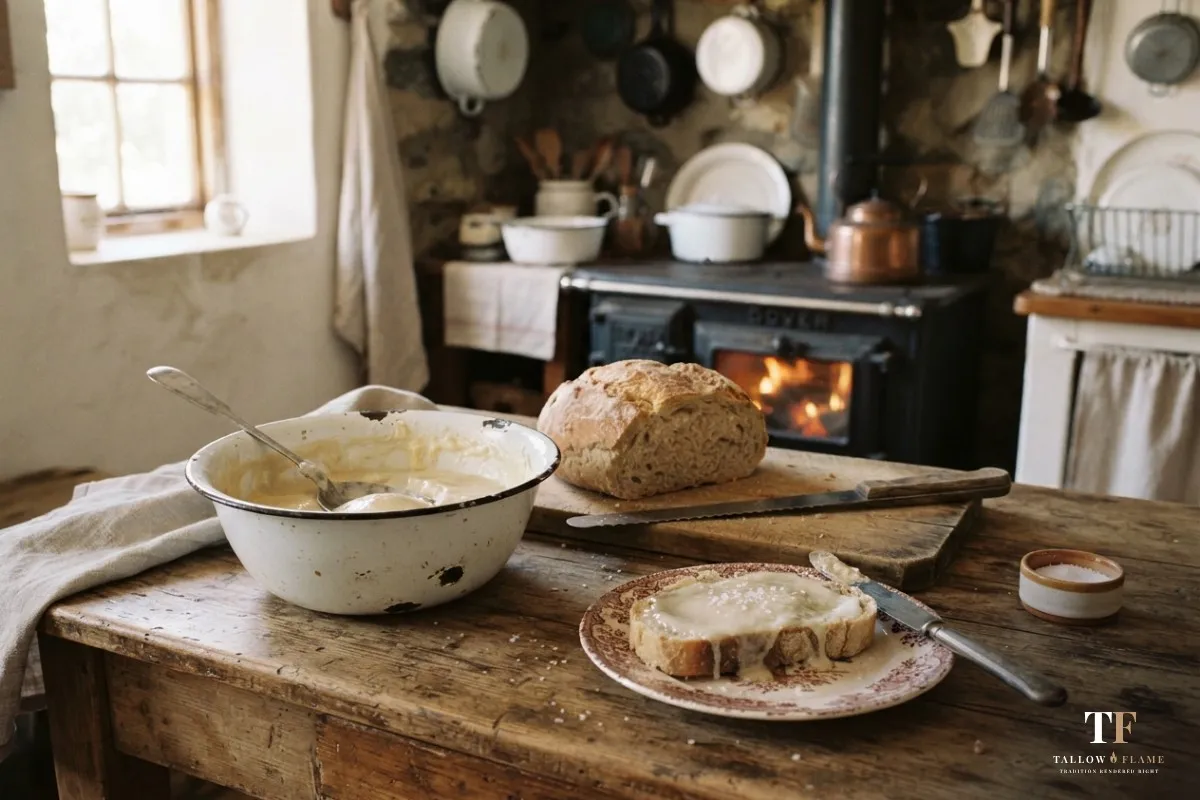
For generations, South African cooking was built on what the farm and the butcher provided. Fat from beef and mutton was rendered and kept, because it was too valuable to throw away. On farms, the fat from slaughter was rendered in big pots, strained and stored, and it lasted for months in a cool pantry. In town, households saved the drippings from the Sunday roast. Some families even spread it on bread with a pinch of salt.
The dishes it made
- Vetkoek: the name says it all ("fat cake"). Fried in fat until golden, filled with mince or jam.
- Roast potatoes: roasted in the fat from the joint, crisp outside and fluffy inside.
- Fried eggs and chips: the plain, perfect meals that dripping made special.
- Pastry: pies and tarts made with beef or mutton fat for a crisp, flaky crust.
How it disappeared
In the second half of the twentieth century, factory-made vegetable oils and margarines became cheap and were sold as the modern, convenient choice. Bottled oil was easy to pour and did not need rendering, and dripping slowly left the kitchen. The dripping tin became something people remembered rather than used.
Why it is coming back
Today more people are cooking from scratch again, reading ingredient labels and looking for food with as few ingredients as possible. Chefs never really stopped using beef fat for chips and roast potatoes, because nothing else gives the same result. And the nose-to-tail idea (using the whole animal, wasting nothing) is exactly what our grandparents did without calling it anything.
Our part in it
Tallow & Flame started with that dripping tin in mind. We render grain-fed beef suet by hand in Centurion, three times, until it is clean, creamy-white and mild, then pour it into tubs and buckets. One ingredient, nothing added. The same tradition, made a little more carefully.
Start with our vetkoek recipe this weekend, and tell us: what did your family cook in dripping?