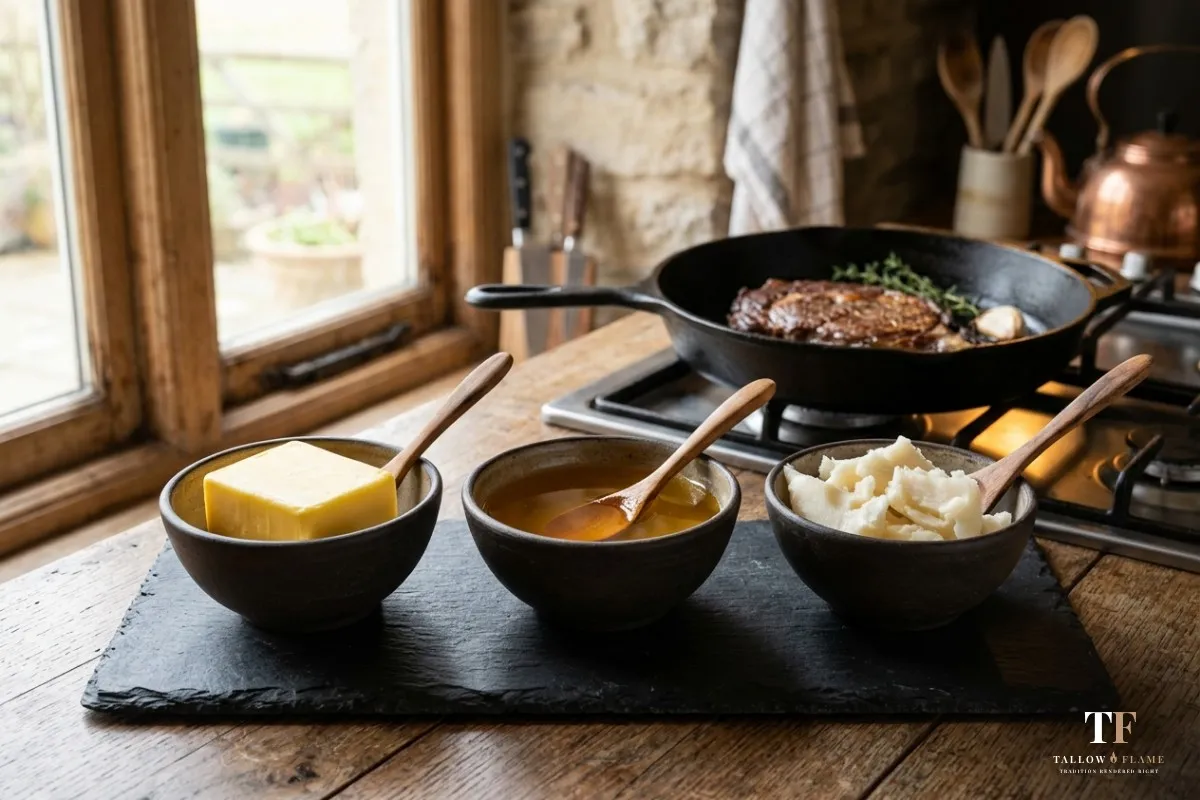
Butter, Ghee or Tallow? Which Fat for Which Job
Walk into any kitchen in South Africa and you will find at least one of these three: a block of butter, a jar of ghee, or (more and more) a tub of beef tallow. All three are traditional, natural fats. But they behave very differently in a hot pan, and choosing the right one for the job makes a real difference to your cooking.
Butter: the flavour fat
Butter is about 80% fat, with the rest water and milk solids. Those milk solids give butter its rich, creamy, slightly nutty flavour, but they are also its weak spot: they start to brown and burn at around 150 to 175 °C. That is why butter foams, browns and turns bitter when you try to sear a steak in it.
Use it for: baking (cakes, biscuits), finishing sauces, basting at the end of cooking, spreading on warm bread, and anything where you want that buttery flavour front and centre.
Ghee: butter without the weak spot
Ghee is butter that has been gently cooked until the water evaporates and the milk solids brown and are strained out. What is left is almost pure butterfat with a toasty, nutty taste. With the milk solids gone, ghee handles much higher heat, often quoted at around 230 to 250 °C.
Use it for: curries and Indian cooking, frying spices, high-heat sautéing when you still want a buttery note.
Beef tallow: the all-rounder
Tallow is rendered beef fat. Ours is made from grain-fed beef suet, rendered three times until it is clean, creamy-white and mild. Like ghee it contains no milk solids, so it stays stable at high heat (commonly quoted at around 200 to 250 °C, depending on how well it is rendered). Its flavour is clean and gently savoury rather than buttery, so it lifts meat and potatoes without taking over.
It is also solid at room temperature, which is what makes it such a good pastry fat: cold tallow creates flaky layers in a pie crust in the same way butter does, with a crisper bite.
Use it for: searing steak, roast potatoes, proper chips, vetkoek, smash burgers, braai veg, flaky pie crusts, and seasoning cast iron.
At a glance
| High heat | Flavour | Best for | |
|---|---|---|---|
| Butter | Low (burns early) | Rich, creamy | Baking, finishing, spreading |
| Ghee | High | Nutty, toasty | Curries, frying spices |
| Beef tallow | High | Clean, savoury | Searing, roasting, frying, pastry, cast iron |
So which one?
Keep all three if you like. Reach for butter when you want butter flavour, ghee for curries, and tallow for anything that needs real heat, crunch or flakiness. If you only keep one fat for everyday cooking, tallow is the one that does the most jobs well.
Try it in our crispy roast potatoes or the new smash burgers. Our tubs run from 500 ml to 20 litre buckets, online or at select Meat World stores.